

In an exclusive interview with Jam-e Jam newspaper, Prof. Mahmoud Golabchi presented practical and up-to-date tips on the necessity of moving towards modern architecture.
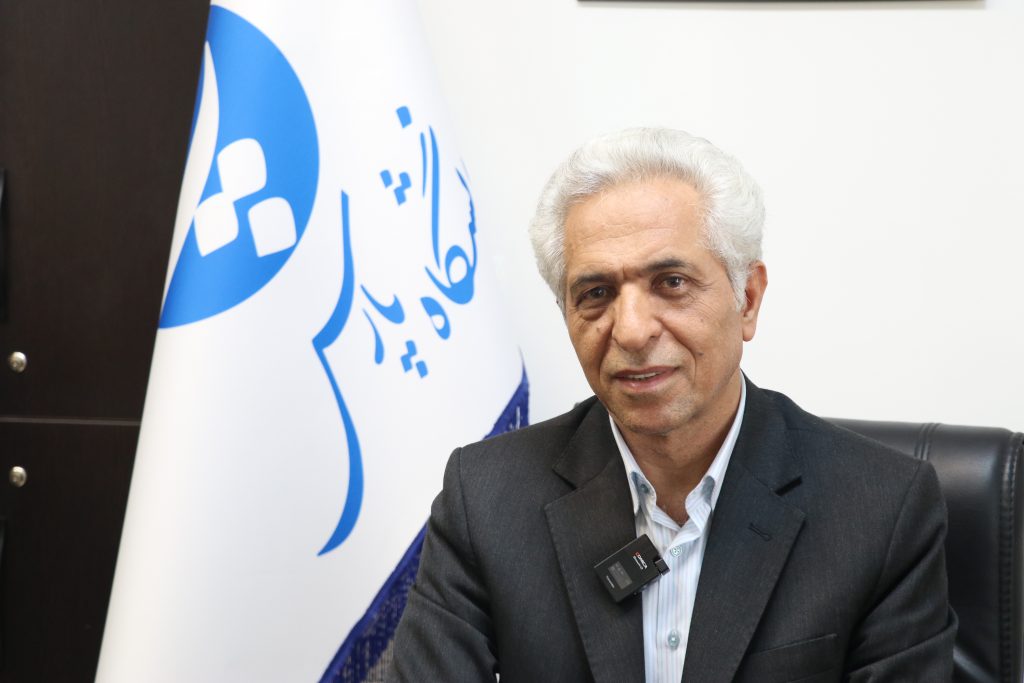
According to the Public Relations Department of Pars University of Architecture and Art, Prof. Mahmoud Golabchi (an enduring figure in Iran’s architecture and civil engineering and also the founder of Pars University), in an exclusive interview with the Jam-e Jam newspaper, presented practical and up-to-date points about the necessity of moving towards modern architecture.
During this conversation, Prof. Golabchi commented on the impact of new technologies on architecture, saying: “In the 20th century, we witnessed the emergence of new technologies such as steel structures, concrete structures, and reinforced concrete (reinforced concrete). After that, gradually with the advancement of science and technology, advanced structures, cable structures, spacework, steel structures, and shell structures were created. Even new structures that architects have been able to design and implement in 3D. Using these technologies, large airports, huge stadiums, and wide bridges have been created, advanced structures that are the result of science and technology and have been able to give more power to the man of the 20th century.
The country’s leading researcher added: “These structures are still developing and expanding in the world. Today, in Iran, albeit with a distance, we have been able to use these technologies and witness the construction of cable structures, geodesic structures (dome-shaped structures with geometric surfaces) and buildings of several dozen floors.
The head of the Council of New Building Technology noted: “At present, we need to use lighter, faster, and less expensive building technology in Iran to be more resistant and safe against earthquakes and to meet people’s housing needs in a short time.” The importance of this issue led us to establish new building technology at Pars University of Architecture, as a center for studies and research of advanced technologies, so that Iran can achieve these new structures over time. These technologies include LSF (light steel frames), ICF (durable insulation molds) and 3D panels (3D panels). These technologies can speed up construction, reduce costs, and create lightweight buildings.
Prof. Golabchi added: “In LSF technology, galvanized sheets with a thickness of 0.6 to 2 mm are cold-rolled at the project site and without the need for forming in the rolling mill into special shapes for roofs and columns.” With this technology, buildings are built that are a quarter lighter than old buildings. If the weight or load of buildings is 500 to 600 kilograms per square meter, this load will be reduced by a quarter. Therefore, we can build light buildings using LSF technology that will cause the least loss of life and property in the face of the most severe earthquakes.
He also emphasized the need to use new materials to protect the environment, saying: “It is possible to increase the quality of materials by using nanotechnology and use materials that cause less damage to the environment, which play a role in maintaining the health of the environment and keeping the planet clean.”
The judge of national and international competitions in the field of architecture noted: By using these technologies, the amount of production of construction waste and waste will also be reduced. Nowadays, the use of recyclable or reusable materials is one of the issues that has been considered in the world so that when destroyed, we have a large amount of waste and waste. The galvanized steels are later returned to the factory after the building is deformed, melted and can be used again.
Referring to the energy imbalance in the country, Prof. Golabchi added: “In order to be able to have optimal energy consumption in buildings, we must use smart systems so that they can turn on the heating and cooling systems in time and turn them off when they are not needed.” It should also be used in times of need. Unfortunately, per capita energy consumption in Iran is higher than global standards, in order to be able to improve this issue to a better situation, it is necessary to use smart methods in ventilation, lighting, and energy consumption systems. At the same time, we should also use the insulation of walls, ceilings, and other methods to reduce energy consumption. Today, smart buildings have made it possible to manage energy consumption in buildings well and achieve optimal energy consumption.


